Diving & Snorkelling
Considering that coral polyps generally do not grow well on granite, the bleaching process that took place in 1998 has not affected the quality of diving in the Seychelles as much as it has other areas of the world. The granite boulders, typical for the Seychelles, continue even below the waterline and make for some spectacular topography, offering plenty of protection and hiding space for marine creatures.
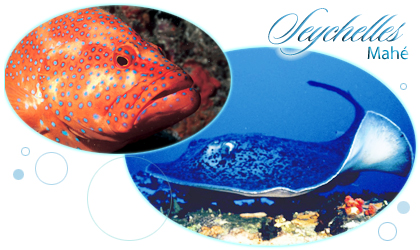
Among countless others, you will most probably encounter huge stingrays, eagle rays, white tip reef sharks, octopus, moray eels, porcupine fish, lion fish, scorpion fish, barracuda, lobster, tuna and massive schools of tropical reef fish. If you travel around September time, there is a good chance to see the majestic whale sharks. In addition to the abundant marine life of about 900 species of fish, divers can do some interesting wreck dives, night dives and long-range dives to some of the more remote sites offshore.
On Mahé, snorkelling is very good right off the beaches, but some of the best you will probably find at Port Launay Marine National Park, on the island's western coast.
|







